Real talk : why I built a bookshelf that can survive a blackout
Best Survival and Homesteading Books aren’t just for collectors—they’re your lifeline when the power goes out and Google can’t help you.Last winter, a power cut handed me a hard truth: Google is amazing—until the Wi‑Fi dies and your phone turns into a shiny paperweight. We were melting snow on a camp stove, rationing flashlight batteries, and I remember thinking, “Okay, I need a better plan.”
That’s how I stumbled into the world of survival books, homesteading books, and the kind of self‑sufficiency books you can spill coffee on and still rely on. Over time, my shelf grew from “cute hobby” to “this could actually save our bacon.”On my shelf of the Best Survival and Homesteading Books, a few stand out as daily-use referencesToday I’m sharing the exact books I recommend if you want real skills for disaster readiness, off‑grid living, food preservation, herbal medicine, urban survival, and homestead planning—without the fluff. I’ll keep this friendly, practical, and a little bit messy (like my seed trays 😅).
Quick picks if you’re in a hurry
- Best all‑around survival guide: SAS Survival Handbook (field‑tested, dense, classic)
- Best homesteading overview: The Self‑Sufficient Life and How to Live It
- Best medical for normal folks: The Survival Doctor’s Complete Handbook + Where There Is No Doctor
- Best pantry build: Lost Superfoods + Ball Blue Book Guide to Preserving
- Best small‑space homesteading: The Self‑Sufficient Backyard + Mini Farming: Self‑Sufficiency on ¼ Acre
- Best skills you actually practice: Bushcraft 101 + The Foxfire Book series
- Best herbal remedies: The Lost Book of Herbal Remedies + The Home Apothecary
Pin or print this and take it to a used‑book shop—thank me later.
Deep Dive: Reviews of the Best Survival and Homesteading Books
1. The Lost Frontier Handbook
Written by Suzanne Sherman, this handbook teaches forgotten pioneer skills like food preservation, gardening, and off-grid living. It’s designed as a practical manual for modern preppers to survive crises by using proven frontier methods.
2. The Lost Superfoods
By Art Rude, Lex Rooker, and Claude Davis, this guide covers over 120 forgotten survival foods that can be stored without refrigeration. It’s a valuable resource for building a long-lasting prepper pantry.
3. Stockpile Savior
Focused on food storage and emergency stockpiling, this book provides step-by-step strategies for creating a reliable reserve of essentials. It’s practical for both beginners and seasoned preppers looking to optimize supplies.
4. Survival MD
Written by Dr. Radu Scurtu, this guide explains how to handle medical emergencies when no doctor is available. It includes instructions for treating infections, wounds, and chronic conditions in survival scenarios.
5. Self-Sufficient Backyard
By Ron and Johanna Melchiore, this book teaches how to live completely off the grid on just a quarter-acre. It covers gardening, food preservation, renewable energy, and self-reliant living.
6. The Doctor’s Book of Herbal Remedies (Dr. John Herzog)
This guide by Dr. John Herzog explains over 100 natural remedies for common illnesses using plants and herbs. It combines modern medical knowledge with traditional healing.
7. The Home Doctor: Practical Medicine for Every Household
By Dr. Maybell Nieves and Dr. Rodrigo Alterio, this survival medicine book shows how to manage health emergencies when medical systems collapse. It emphasizes practical, hands-on solutions.
8. SAS Survival Handbook
Written by John “Lofty” Wiseman, a former SAS soldier, this is one of the most comprehensive survival manuals. It covers wilderness survival, disaster preparedness, navigation, and self-defense techniques.
9. The Survival Medicine Handbook
By Dr. Joseph Alton and Amy Alton, this guide is considered the ultimate medical reference for survivalists. It provides in-depth strategies for treating injuries, infections, and emergencies when professional help isn’t available.
10. 2025 Prepper Survival Bible
This modern survival manual compiles up-to-date strategies on prepping, off-grid living, and disaster readiness tailored for current global risks. Aimed at new preppers, it provides simplified, actionable steps.
11. No Grid Survival Projects
A practical guide full of DIY projects to survive off the grid—covering water collection, food storage, and energy independence. Perfect for preppers who want hands-on solutions.
12. Off-Grid Project Encyclopedia
This book offers a wide variety of off-grid projects, from building solar systems to food production methods. It’s a go-to reference for anyone wanting complete self-sufficiency.
13. Edible Wild Plants
By John Kallas, PhD, this book explains how to safely identify, harvest, and prepare edible plants in the wild. It includes detailed photos, nutritional facts, and preparation tips.
14. The Forager’s Guide to Wild Foods
Written by Nicole Apelian, PhD, this guide includes over 400 wild plants and mushrooms of North America. It offers identification tips, medicinal uses, and preparation methods.
15. Navy SEAL Survival Guide / Bug-In Guide
Based on U.S. Navy SEAL training, this book teaches how to survive extreme situations, defend your home, and bug in safely during crises. It’s packed with tactical advice.
16. The Lost Ways
By Claude Davis, this book reveals ancient survival methods our ancestors used, such as food preservation, natural medicine, and shelter-building. It emphasizes sustainable survival skills.
17. The Forgotten Home Apothecary
This natural remedies book explains how to make tinctures, teas, and salves at home. It’s a beginner-friendly resource for building a functional herbal medicine cabinet.
18. Prison Fighting Advantages (Digistore24)
A unique self-defense book that explains unorthodox fighting techniques inspired by survival in prison. It emphasizes mental toughness, awareness, and practical defense strategies.
19. Bushcraft 101
By Dave Canterbury, this is a field guide to wilderness survival skills like fire-making, shelter building, and foraging. Written by a survival instructor, it’s perfect for bushcraft enthusiasts.
20. Back to Basics
Edited by Abigail Gehring, this book covers everything from homesteading and food preservation to traditional crafts. It’s a thorough manual for living a simpler, self-reliant lifestyle.
21. When All Hell Breaks Loose
By Cody Lundin, this survival guide focuses on urban survival and coping with disasters. It combines humor with solid survival strategies for both mental and physical preparedness.
22. When There Is No Doctor
By David Werner, this is a trusted community health guide for remote areas. It covers essential first aid, disease treatment, and practical medicine for families.
23. When There Is No Dentist
By Murray Dickson, this companion to “When There Is No Doctor” explains how to diagnose, treat, and manage dental problems in survival conditions.
24. The Encyclopedia of Country Living
By Carla Emery, this classic book covers everything from farming and gardening to food preservation and livestock care. It’s widely regarded as the ultimate homesteading manual.
25. The Ball Complete Book of Home Preserving
By Judi Kingry and Lauren Devine, this is the gold standard for safe canning and preserving food. It features 400+ tested recipes for long-term food storage.
26. The Foxfire Book Series
Based on Appalachian traditions, this series captures old-time skills like blacksmithing, farming, hunting, and natural medicine. It’s both cultural history and a practical survival guide.
More popular picks you’ll find on Amazon (brief notes)
- The Backyard Homestead (Carleen Madigan): small‑space yields, garden maps, and food preservation basics.
- Back to Basics (Abigail Gehring): broad DIY homesteading projects—woodstoves, soap, cheese, and simple builds.
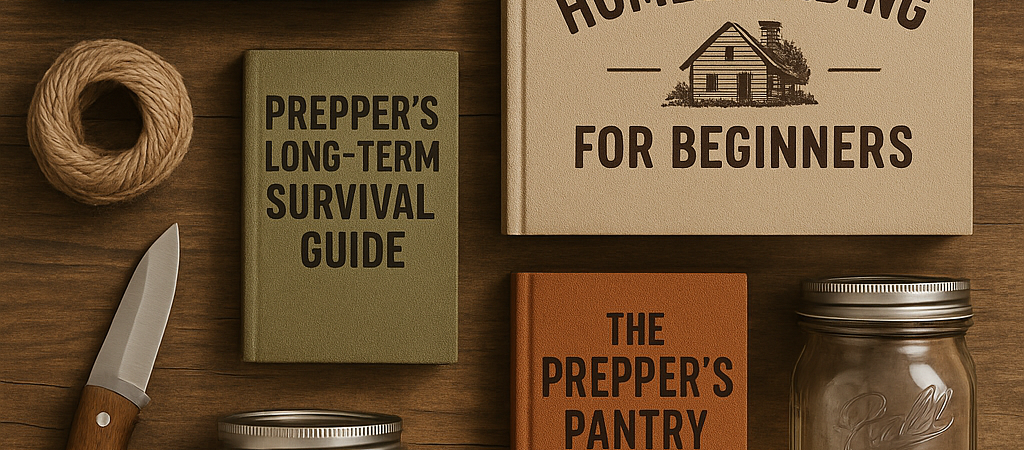
- The Prepper’s Long‑Term Survival Guide (Jim Cobb): water, security, grid‑down living, and community planning.
- The Prepper’s Water Survival Guide (Daisy Luther): collection, storage, purification—great water safety primer.
- The Survival Medicine Handbook (Joseph & Amy Alton): trauma, infections, dental pain—thorough medical prepping.
- When There Is No Dentist (Murray Dickson): practical dental care in low‑resource settings.
- All New Square Foot Gardening (Mel Bartholomew): intensive raised‑bed gardening with high yields.
- Peterson Field Guide to Edible Wild Plants: ID basics for foraging (pair with regional guides).
- The Bushcraft Field Guide to Trapping, Gathering, and Cooking (Canterbury): camp food skills.
- Build Your Own Off‑Grid Solar (Green/DIY titles): simple solar power system planning.
- Root Cellaring (Bubel & Bubel): passive, low‑energy food storage for produce.
- Country Wisdom & Know‑How (Storey): bite‑sized self‑reliance tips and how‑tos.
- The Forager’s Harvest (Samuel Thayer): deep dive edible plant profiles and ethics.
- The Herbal Medicine‑Maker’s Handbook (James Green): tinctures, salves, and home apothecary techniques.
- Mini Farming: Self‑Sufficiency on 1/4 Acre (Bret Markham): yields, crop rotations, and homestead finances.
Tip: Mix a few survival guide books with skill‑specific manuals (canning, herbal, off‑grid power). That blend covers emergencies and daily life.
How I actually use these (so they don’t just sit pretty on a shelf)
- Weekend skill sprints: Pick one chapter (knots, canning, tinctures) and practice for 90 minutes.
- Seasonal goals: Spring = soil + seeds. Summer = preservation. Fall = repairs. Winter = urban survival drills and first‑aid refreshers.
- Micro‑library builds: Bathroom has Where There Is No Doctor; kitchen drawer has The Home Doctor; garage has Bushcraft 101.
- Family drills: Five‑minute “What if the power went out now?” games. Kids love it; I get to test our emergency preparedness.
Beginner Bundles: Best Survival and Homesteading Books for Every Prepper
If you’re brand‑new to prepping
- SAS Survival Handbook
- The Survival Doctor’s Complete Handbook
- Lost Superfoods
- The Prepper’s Water Survival Guide
If you have a tiny space (urban homesteading)
- The Self‑Sufficient Backyard
- All New Square Foot Gardening
- Ball Blue Book Guide to Preserving
- Bushcraft 101
If you want herbal + DIY remedies
- The Home Apothecary
- The Lost Book of Herbal Remedies
- Where There Is No Doctor
- The Survival Medicine Handbook
If you’re aiming for full self‑reliance
- The Self‑Sufficient Life and How to Live It
- The Encyclopedia of Country Living
- Back to Basics
- One Acre & Security
Final thoughts
I’m not trying to be the toughest person in the room—I just don’t want my family’s plan to be “hope for the best.” These books made prepping feel less scary and more like a set of daily habits I can practice: grow a little food, store a little water, learn a new skill, repeat. If you grab even two or three from this list, you’ll feel the difference.
Affiliate Disclosure: I may earn a small commission from purchases made through the link above, at no additional cost to you.
For official guidance on building your emergency plans and supplies, check out FEMA’s Ready.gov.
Also read: Urban Prepping Food Storage: 7 Smart Strategies for Long-Term Survival